

E gyptian and Grecian antiquity converge in this one-of-a-kind draped velvet dress, where historical symbolism and sculptural proportion are reinterpreted through couture craft. It is not costume. It is composition.
“When antiquity is interpreted through couture, the past becomes structure — not spectacle.”
Egyptian Influence: Symbol & Opulence
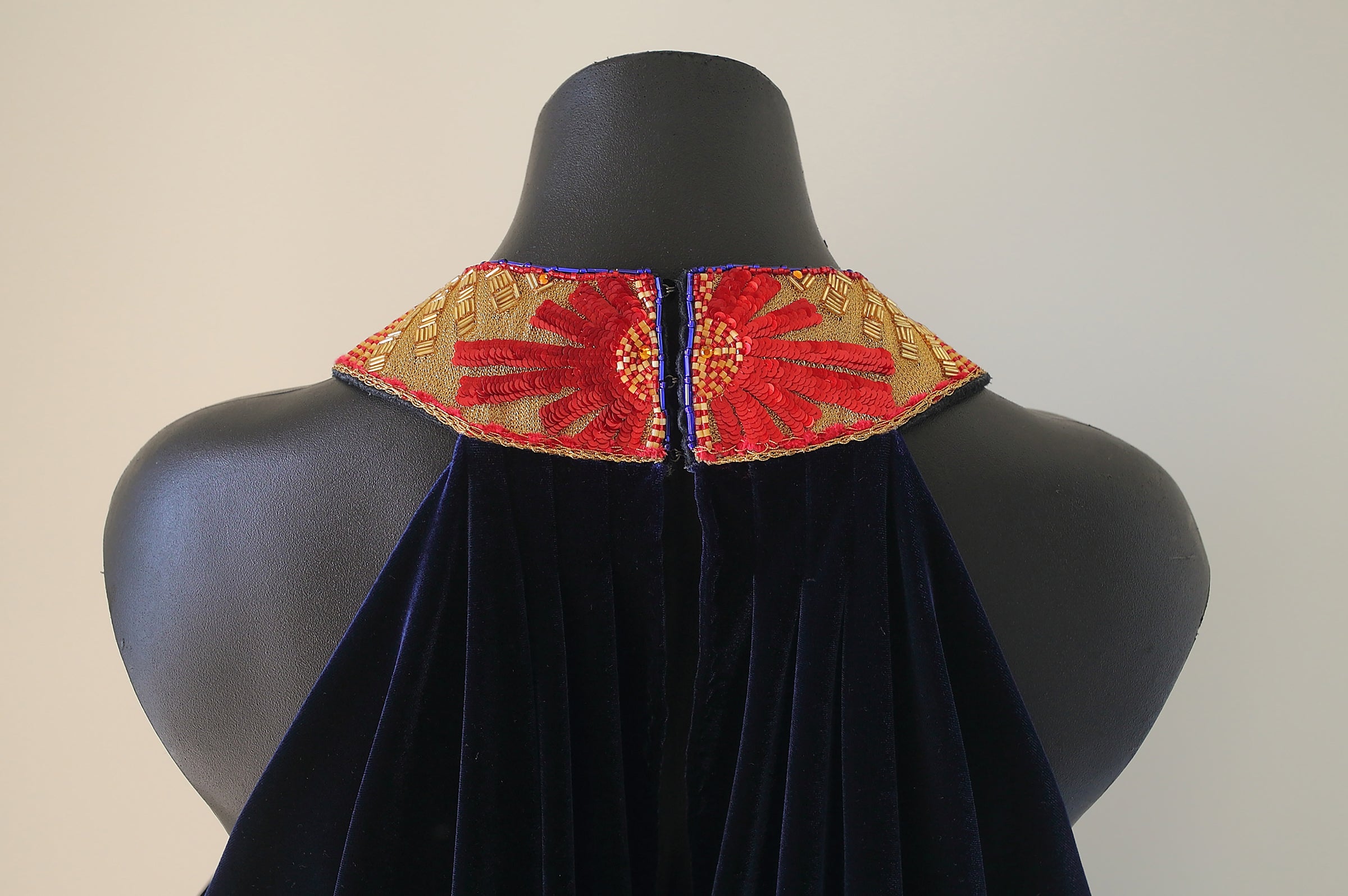
The richness of ancient Egyptian art informs the garment’s detailing — gold-toned embellishment, symbolic motif, and a sculptural beaded leather collar reminiscent of ceremonial adornment. Geometry in the form of sun rays paying hommage to Ra the ancient Egyptian Sun God echos through its composition.
These references are restrained rather than literal — interpreted with discipline, allowing history to whisper rather than shout.

Grecian Drapery: Silhouette & Movement
The elegance of ancient Greek drapery shapes the garment’s structure. Flowing lines and soft folds evoke the geometry of classical tunics, while sculpted pleating creates the extra dimension to sculpt the body with intention.
Velvet, with its depth and quiet sheen, lends gravity to the silhouette — allowing movement without excess.

Velvet as Structure, Not Ornament
Historically associated with royalty and ceremony, velvet carries weight — both literal and symbolic. Here, it becomes structural architecture. The fabric absorbs light, holding depth and dimension across the form.
The result is a garment that feels timeless rather than theatrical — grounded in proportion, balanced in detail.

By fusing Egyptian symbolism and Grecian drapery, this antiquities inspired velvet dress transcends era. It embodies lineage, restraint, and couture discipline — an homage not to costume, but to cultural continuity.
For acquisition enquiries or bespoke adaptation, you are invited to connect privately.
—
Olivia Torma
Founder, The Vintage Couturière


