

Portraiture has never been merely about likeness. From its earliest forms, it has always been an act of preservation — an attempt to hold a person beyond time. But what endures is not the accuracy of the face alone. It is often the gesture. In legacy couture portraiture, gesture becomes more than a matter of pose. It is the architecture through which a woman’s presence is shaped, perceived, and remembered.
François Boucher’s Madame de Pompadour is a particularly apt example with which to begin. Here, the hands do not rest passively within the portrait. One hand holds a book with quiet assurance, while the other settles lightly upon the cushion, neither idle nor performative, but composed.
Around her, objects extend this language of gesture beyond the body itself: a feather quill rests among papers, an inkwell partially concealed within the drawer, alongside a stick of wax, a sealed envelope, and a candle — each associated with correspondence, authorship, and the transmission of thought across distance and time. These elements are not incidental. They position the sitter within an intellectual and cultural sphere in which writing, reflection, and exchange form part of her identity. Her gaze, directed away from the viewer, suggests a moment of inward consideration rather than outward display. Together, the objects and the body form a coherent system of meaning — a portrait not of appearance alone, but of a woman in possession of her intellect, her time, and the authorship of how she is seen.

Gesture as Language
The inclination of the head, the placement of the hands, the quiet tension or softness across the shoulders, the way a body settles into stillness — these details are never incidental. They determine whether a portrait feels inhabited or merely arranged. Gesture is what allows a portrait to breathe long after the subject is gone.
Gesture in portraiture is not incidental. It is a form of language. Before the viewer consciously interprets expression, posture and bodily orientation have already begun shaping meaning. Open palms may suggest receptivity. Folded hands may imply restraint. A lifted chin can communicate authority, while a softened head angle may suggest reflection or inwardness. Gesture does not simply describe the sitter. It interprets her.
Art historians and curators have long recognised this. Queensland Art Gallery & Gallery of Modern Art’s essay Hand Gesture Is a Language of Its Own is especially useful because it moves beyond the general idea that hands are expressive and shows how painters use them as a sophisticated visual syntax. The essay notes that we read hands much as we read tone of voice or subtle shifts of expression, then traces how gesture can carry changing meanings across time: from Fra Angelico’s purse-hand gesture of awe, to Giovanni di Paolo’s welcoming embrace in paradise, to Poussin’s pointing, shrugging, and reaching figures, and Greuze’s moral drama organised through the agitation of hands. In this sense, hands do not simply accompany the scene. They make the scene legible.
The Hand as One of Portraiture’s Deepest Instruments
No part of the body is more regularly mishandled in portraiture than the hands, and yet few elements carry so much meaning. They reveal whether a person is settled or tense, receptive or guarded, composed or uncertain. In painting and photography alike, hands often hold a disproportionate share of emotional and narrative weight.
Historically, hands often held gloves, books, flowers, jewellery, or portions of dress. They were not simply given something to do. They were used to extend the sitter’s identity into the image. In contemporary legacy portraiture, the same principle remains useful. The hand should not be busy. It should be meaningful.
For practical portrait coaching, this is one of the clearest starting points. A portrait can survive a neutral expression more easily than it can survive lifeless hands. The body leads. The face follows.

“Gesture is the architecture through which a woman is remembered.”
Gesture as Meaning: The Body as Narrative
Across the history of painting, gesture was rarely neutral. It was shaped by convention, class, culture, and artistic intention. Certain postures came to signify authority, reserve, intelligence, piety, or refinement. Hands were often rendered with extraordinary care because they extended the portrait’s rhetoric beyond the face. They reveal, conceal, direct, and mediate between the sitter and the viewer.
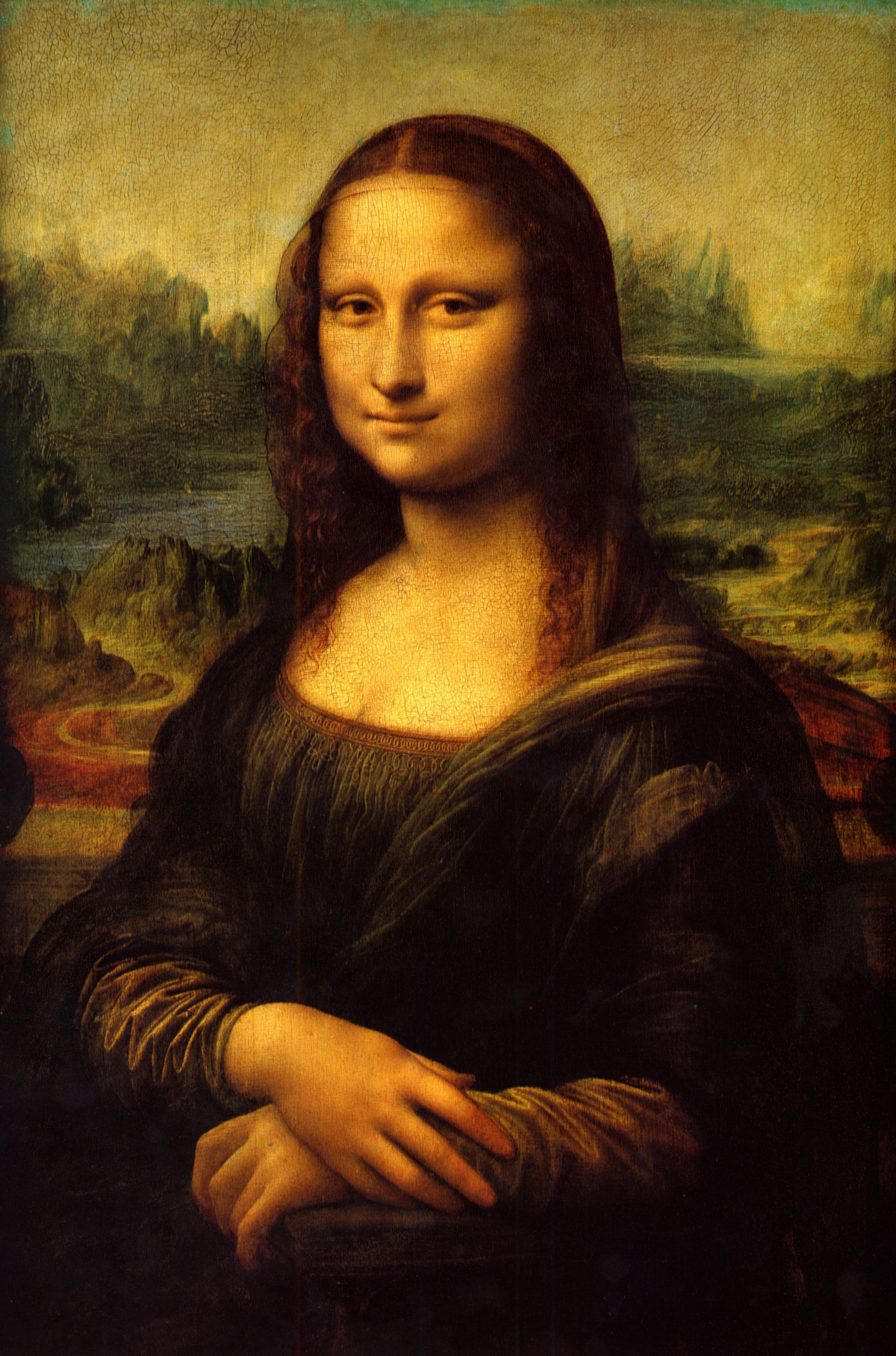
This can be seen with particular clarity in Leonardo da Vinci’s Mona Lisa, where the placement of the hands provides the structural foundation of the portrait. Resting one over the other, they stabilise the composition and draw the eye into a state of quiet attention. There is no overt gesture, and yet the body is fully present. The figure does not perform for the viewer. She is already composed within herself.
In this way, gesture has always functioned as a form of non-verbal storytelling. It creates an empathetic bridge across time. A viewer may not know the sitter, but they recognise the human language carried in posture, tension, direction, and restraint.
The expression and gaze extend this language of gesture beyond the hands. The slight, controlled movement of the mouth and the direct yet softened gaze have long been understood as central to the portrait’s enduring presence. Rather than describing a fixed emotion, the expression remains suspended — neither fully resolved nor entirely withheld. In this sense, the face operates as a continuation of the body’s gesture, carrying a subtle tension between openness and restraint.
Historically, this marked a significant shift in portraiture. Earlier traditions often relied on codified gestures of the hands and body to communicate meaning. Here, that language is refined inward. The smallest inflection of the mouth and the steadiness of the gaze assume the role previously held by more overt bodily signs. Gesture becomes less declarative and more perceptual — something that unfolds through sustained looking rather than immediate recognition. It is this quiet expansion of gesture into expression and gaze that allows the portrait to remain continuously legible, yet never fully fixed.
Photography and the Refinement of Presence
If gesture in painting established a language through which the body could be read, the emergence of photography altered how that language was perceived. The camera’s ability to record likeness with precision allowed portraiture to move away from description and toward atmosphere, psychology, and presence. Gesture did not disappear. It became more exact.
This refinement can be seen clearly in the photographic portraits of Nadar, one of the earliest practitioners to approach portraiture as an art of character rather than documentation. Working in Paris in the mid-nineteenth century, he photographed many of the leading cultural figures of his time, including the celebrated actress Sarah Bernhardt, whose public image was already shaped through performance, authorship, and a highly controlled sense of presence.

In this portrait, gesture is no longer articulated through overt pose or symbolic props, but through inwardness. The placement of the hand against the face becomes central to the image. It is neither decorative nor incidental. It supports the head while simultaneously drawing attention inward, creating a gesture that reads as contemplative rather than expressive. The face is not presented for inspection, but partially withdrawn into the gesture itself.
Nadar’s approach marked a significant departure from earlier conventions. Rather than using the camera to describe appearance, he used it to distil presence. In doing so, he shifted portraiture away from external likeness toward psychological interiority. Bernhardt, known for her theatrical intensity, is here rendered in a state of restraint — her presence gathered rather than projected.
In this configuration, gesture becomes inseparable from thought. The body does not perform for the viewer. It settles into itself. The smallest adjustment — the angle of the wrist, the pressure of the hand, the inclination of the head — carries the full psychological weight of the portrait.
This marks a decisive shift in how gesture functions within portraiture. Meaning is no longer dependent on clearly legible signs, but on the discipline of presence. Gesture in legacy couture portraits becomes less visible, but more exact. It is not immediately read. It is gradually perceived.
This is a crucial distinction for legacy portraiture. Gesture is not always movement. It can be a held condition — a poised stillness through which the portrait gathers emotional force. It is this refinement that allows the body, even in stillness, to carry meaning with precision.
And yet, this refinement does not exist independently of form. The body is never separate from what it wears. If photography reveals gesture through presence, couture introduces another dimension — one that shapes how that presence is held, structured, and ultimately seen.
What Couture Changes in the Language of Gesture
In legacy couture portraiture, gesture cannot be separated from garment. Couture changes the relationship between body and image. A fitted bodice alters the carriage of the spine. A structured sleeve changes the line of the arm. A full skirt affects how weight is held, how stillness is perceived, and how the body occupies space within the frame.
This relationship becomes particularly vivid in the work of Giovanni Boldini, whose portraits anticipate a more modern understanding of fashion, movement, and presence. In his Madame Charles Max, painted in 1896 and now held at the Musée d’Orsay, the figure is not contained within the garment. She is extended by it.

Boldini represents Jeanne Max, a society singer known within the Parisian cultural sphere for her presence as much as her performance. Rather than fixing her into a static pose, he captures her mid-movement. The body advances slightly, the weight shifts forward, and the dress is gathered just enough to allow the gesture to continue. The figure appears to be in motion, yet held within the frame.
The gesture is not applied to the body after the fact. It emerges through the interaction between body and garment. The structure of the bodice defines the vertical line of the torso, while the movement of the skirt extends that line outward, creating a continuous rhythm that moves beyond the physical form. The hand lifting the dress is not incidental. It is necessary — a response to the garment itself.
In this configuration, gesture becomes continuous rather than fixed. It travels through the figure, from the inclination of the head, through the alignment of the body, and into the movement of the fabric. The portrait does not separate stillness from motion. It holds both at once.
This is where couture and gesture meet most precisely: not as embellishment, but as structure in motion. The garment provides the framework through which the body can be read, and the body gives that framework meaning through alignment, rhythm, and control. The portrait becomes a composition in which dress, body, and presence are inseparable.
“The garment shapes the gesture. The gesture gives the garment life.”
Gesture, Maturity, and the Language of Self-Possession
For women in midlife and beyond, gesture often carries a different register. Contemporary image culture still tends to reward performance, trend, and surface display. Yet many women are no longer interested in being styled into an image that could belong to anyone. They want a portrait that reflects depth, self-knowledge, and authorship.
In this context, stillness can carry more power than movement. Restraint can read as confidence. The smallest physical adjustment can feel more truthful than a series of more dramatic poses. Gesture in legacy couture portraits becomes less about performance and more about inhabiting presence. It no longer asks for attention. It holds it.
This is one reason gesture belongs at the centre of a legacy couture portrait. Such a portrait is not trying to recreate youth or perform an ideal. It is trying to preserve a woman’s bearing, and bearing is written through the body.
A more precise expression of this can be found in early twentieth-century portraiture such as the Harris & Ewing photograph of Mrs. Oscar W. Underwood. As the wife of a prominent American senator, she occupied a public yet socially codified role, and her portrait reflects a mode of presence shaped not by performance, but by expectation, composure, and bearing. Harris & Ewing, a leading Washington studio, were known for photographing political and social figures with clarity and restraint, often using natural window light and minimal staging to allow the sitter’s presence to emerge.

In this image, gesture is neither symbolic nor expressive in the traditional sense. The hand rests lightly against the window frame, not as an ornamented movement, but as a point of balance within the composition. The curtain itself, softly lit by natural light, provides both structure and atmosphere, giving the body a place to settle rather than something to perform against. The couture gown — fitted through the bodice and falling cleanly through the line of the body — reinforces this sense of containment, shaping posture without calling attention to itself. The figure does not occupy the space loosely; she is held within it.
What gives the portrait its authority is not movement, but alignment. The posture is sustained, the gesture minimal, and the gaze steady without insistence. As a woman in midlife, her presence reads as settled rather than searching. Nothing is exaggerated, and nothing is withheld. The image does not ask to be read quickly. It holds through stillness, offering a form of self-possession that is neither constructed nor performed, but quietly maintained through the coherence of body, garment, and light.
Toward a Practical Study of Gesture in Legacy Couture Portraits
For practical work, several principles emerge. Gesture precedes expression. Hands are narrative anchors. Stillness is active, not passive. Every gesture must align with the garment. Small adjustments often create the most significant changes. And above all, a gesture must be sustainable. If it cannot be held naturally, the portrait will reveal its strain.
These ideas echo older artistic practices such as gesture drawing, where the aim is not polished finish but recognition of rhythm, weight, and direction within the body. The lesson for portraiture is much the same. One does not force the body into significance. One learns to observe where significance begins to appear.
You may also wish to read why women over fifty are choosing legacy couture portraits.
Where Gesture Resolves
A portrait endures not through fashion or surface, but through presence. It is gesture that makes that presence legible — the way a woman holds herself, settles into stillness, and allows the body to align with the garment and the frame.
In legacy couture portraiture, gesture is not added. It is resolved. Form and body meet in quiet alignment, and what remains is not performance, but bearing — a presence that feels inhabited, coherent, and enduring.
“Gesture is where presence resolves into something that endures.”
A Quiet Invitation
If this essay resonates, you are invited to begin with The Couture & Fine Art Portraiture Workbook, created to help you reflect on the story, symbolism, and presence you may wish your portrait to hold.
To receive the Workbook and complementary Commission Guide, subscribe to The Couture Concierge Privé below.
If you already know you would like to consider the experience in more depth, you are also welcome to read about a legacy couture portrait commission.
—
Olivia Torma
Founder, The Vintage Couturière


