


M any women over fifty are no longer willing to accept the way they are represented in contemporary portraiture. It is not that images do not exist. It is that too few of them feel accurate. Too often, they are shaped by expectations that belong to a different stage of life — or by aesthetic trends that prioritise performance over presence. The result is a quiet but growing disconnect between how a woman sees herself and how she is portrayed. That dissonance becomes difficult to ignore when a woman who has reached midlife and beyond has lived through reinvention, responsibility, loss, growth, and a clearer understanding of who she is and what matters to her most.

This image was chosen to open this essay with a quiet protest — a reflection of the experience of many women over fifty who feel increasingly unseen, and who are no longer willing to be defined by how they are presented in contemporary imagery.
It draws on a tradition from 19th century portraiture known as the Rückenfigur, where the subject is turned away from the viewer. Rather than presenting the woman for observation, it suggests reflection — a moment of inward consideration before she chooses how she will be seen. This is where many women now find themselves. For women over fifty, portraiture has taken on a different meaning.
What many women over fifty are responding to is a desire for portraiture that reflects depth, authorship, and the life they have lived. This is one reason more women are choosing a legacy couture portrait instead of a traditional photoshoot. They are not simply looking for flattering images. They are seeking something more deliberate — a portrait shaped by craftsmanship and the decision to be seen with intention, presence and authorship.
A traditional photoshoot may capture a moment. A legacy couture portrait is created to hold enduring meaning.
Read what are legacy couture portraits .
Contemporary portraiture continues to draw on these traditions. Annie Leibovitz’s portrait of Queen Elizabeth II demonstrates how modern photography can still convey authority, restraint, and presence without relying on excess or performance.

Leibovitz’s portrait of the Queen departs from convention through its use of atmosphere, scale, and restraint. She stands alone within an expansive landscape, positioned against a darkened sky that appears heavy with approaching weather. The setting is open yet subdued — water, winter trees, and distance — creating a sense of quiet isolation rather than ceremony.
The composition is deliberate. The Queen is placed centrally, her form anchored and still, while the environment recedes around her. She wears a dark, structured coat that reads almost as a silhouette against the muted tones of the landscape, allowing her presence — rather than embellishment — to define the image. The light is low and directional, falling softly across her face while the surrounding scene remains subdued.
This contrast draws attention not to spectacle, but to presence. There is no overt performance. No attempt to soften, disguise, or dramatise. The portrait allows her to stand as she is — composed, self-possessed, and entirely grounded in herself.
Within the context of contemporary portraiture, this is significant. It reflects a growing shift among women over fifty who are turning away from images that prioritise idealisation or performance, and toward portraits that convey authority, clarity, and lived experience. The image does not attempt to recreate youth or embellish identity. It acknowledges presence as it is — and in doing so, it carries a quiet, enduring strength.
Portraiture Has Historically Marked Life Transitions
Portraiture has never been entirely casual. Historically, painted portraits and later photographic portraits were often commissioned to mark marriage, maturity, status, authorship, or a meaningful shift in a woman’s life. They were made with the expectation that they would endure, and that they would communicate more than physical likeness alone.
This can be seen in the work of artists such as John Singer Sargent, whose portraits of women often conveyed far more than dress or appearance. They suggested temperament, self-possession, and a particular moment in a woman’s life. The sitter was not only recorded. She was interpreted.

Sargent’s Lady Agnew of Lochnaw is particularly useful here because it shows how portraiture can communicate poise, intelligence, softness, and social presence all at once. Commissioned by her husband for exhibition at the Royal Academy in London, the portrait departs from convention—capturing not only her status, but a more immediate and perceptive presence. Nothing dramatic appears to be happening, and yet the portrait feels unmistakably alive. That is precisely the point. A portrait can hold stillness and still convey authority, interiority, and self-command.
This way of seeing did not remain confined to painting.
By the mid-nineteenth century, photography began to take on this same role — not as documentation, but as interpretation. The work of Julia Margaret Cameron demonstrates this shift clearly. Her portraits move away from description and toward presence, suggesting that a photograph can convey character and interior life, not only appearance.

Cameron’s Julia Jackson is a powerful example of this sensibility. The softness of focus and closeness of composition do not diminish the sitter. They deepen her. The image suggests that portraiture can reveal interiority, not only appearance.
More Than a Traditional Photoshoot
A conventional photoshoot is often structured around speed: a location, a set of outfits, a short session, and a gallery of images. It may produce beautiful photographs, but it is rarely designed to carry emotional depth over decades.
A legacy couture portrait follows a different rhythm. It begins before the camera is lifted. It is shaped through conversation, silhouette, atmosphere, and light. It considers not only how a woman looks, but how she wishes to be seen, remembered, and celebrated. This difference is often visible in how she chooses not to be fully revealed.

This distinction matters. Many women reach a point where they no longer want to be styled into an image that could belong to anyone. They want a portrait that feels authored — one that acknowledges the life they have lived and the woman they are now or becoming.
“A woman does not turn away to disappear. She turns away to decide how she will be seen.”
Why Midlife Changes the Meaning of Portraiture
Earlier photographs in a woman’s life are often made for other purposes — family milestones, work, weddings, events, documentation. Midlife portraits can be different. They can be chosen for the self. Not as proof of youth. Not as performance. But as an acknowledgment that this chapter matters and deserves to be preserved with care.
This is one reason portrait photography for women over fifty is taking on a deeper significance. Women are not simply asking for photographs. They are asking for portraits that carry truth, beauty, and authorship.
Earlier images may have documented roles. A legacy portrait documents presence. It reflects not just what has happened in a woman’s life, but who she has become within it.
For many women, this stage of life also brings a clearer sense of aesthetic identity. They know what feels authentic. They are less interested in convention for its own sake and more interested in meaning, proportion, atmosphere, and visual integrity. This is part of why a more considered portrait experience resonates so strongly now.

The Role of Couture in a Legacy Portrait
Couture changes the way a portrait feels. It introduces structure, drape, proportion, and finish. It shapes posture and lends visual authority to the image. More importantly, it allows the portrait to move beyond styling and into authorship.
The garment is not there to disguise the woman. It is there to support her presence. Fabrics, colour palettes, embroidery, silhouette, and historical references all contribute to the final image. In this way, the portrait becomes not simply an image of the woman, but a considered expression of how she wishes to be represented. This is where couture becomes visible—not as embellishment, but as structure shaping the image itself.
In the late nineteenth century, portraiture evolved alongside the rise of haute couture, where garments were conceived not only to be worn, but to shape how a woman would be seen—within the image and beyond it, as seen in this portrait of Countess Élisabeth Greffulhe, a French countess and noted patron of haute couture.
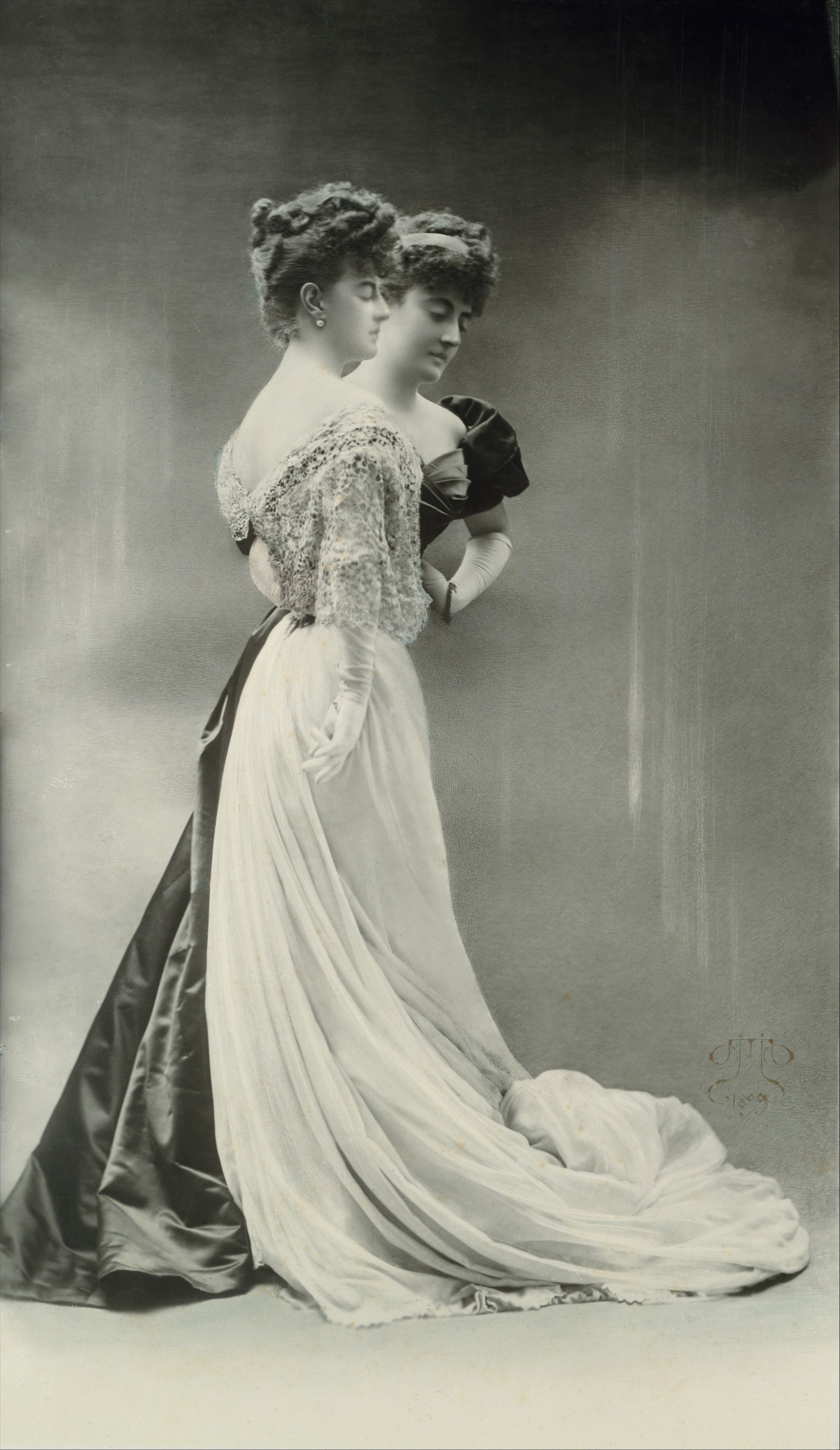
Seen in this way, the portrait becomes more than an image. It becomes a considered composition of identity—an idea reflected in Countess Greffulhe’s carefully constructed self-presentation, where the double image suggests both presence and self-reflection, and one that continues to inform the way legacy couture portraits are approached today.
A Luxury Portrait Experience With Meaning
A true luxury portrait experience is not defined only by aesthetics. It is defined by care — in the way the consultation is held, in the way the garment is chosen or made, in the way the setting is selected, and in the way light is shaped to honour rather than overstate.
This is what gives the final portrait emotional gravity. It feels considered because it is. What distinguishes this kind of portrait is not excess, but intention. It is slower, more reflective, and more personal. The result is an image that does not merely flatter in the present, but continues to feel relevant in the years that follow.
This is also why fine art portraits for mature women continue to resonate so strongly. They offer something traditional photoshoots often do not: depth of process, artistic interpretation, craftsmanship, and permanence.
To explore the experience in greater detail, visit the Legacy Couture Portrait Commission Page.
Begin With Reflection
For many women, the first step is not immediately booking a session. It is taking time to consider what they want the portrait to express, what chapter of life they are in, and how they wish to be seen now and in the future.
That process of reflection is an important part of the work. It is also why this experience tends to feel so different from a conventional shoot. It begins before the camera is ever lifted.
The Couture & Fine Art Portraiture Workbook was created to support that stage of thought. It is a private guide for women considering a legacy couture portrait and wanting to reflect on aesthetic direction, symbolism, personal meaning, and the story they may wish the portrait to hold.
A Quiet Invitation
If you are curious to explore a legacy couture portrait commission, you are invited to begin with The Couture & Fine Art Portraiture Workbook.
To receive the Workbook and complementary Commission Guide, subscribe to The Couture Concierge Privé below.
If you already know you would like to discuss the experience in more depth, you are also welcome to make a private enquiry.
—
Olivia Torma
Founder, The Vintage Couturière


